
Project Number: 3192
Electric Indexing Preheating Conveyor Oven System for Power-Electronics Burn-In Test Preparation
Overview
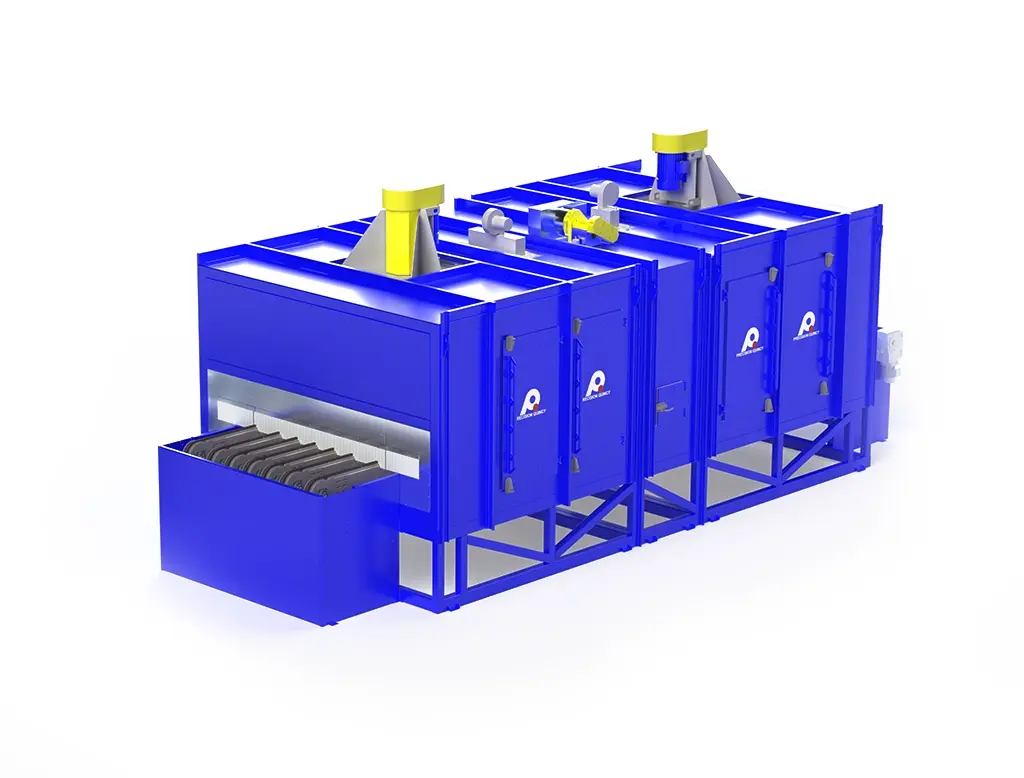
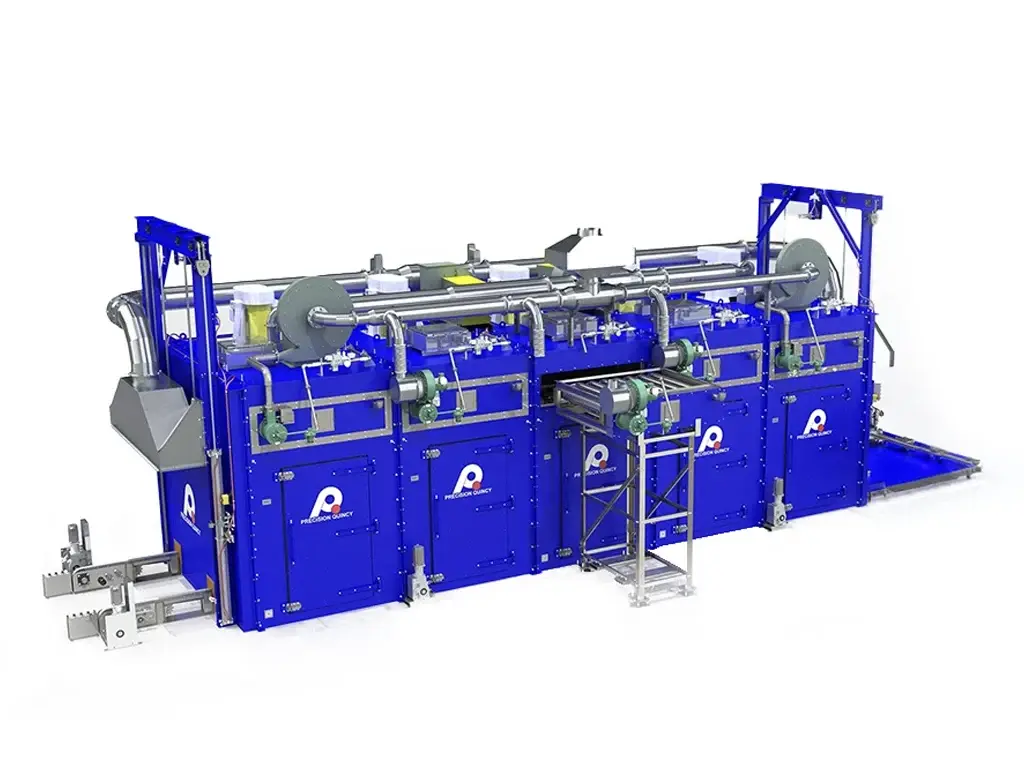
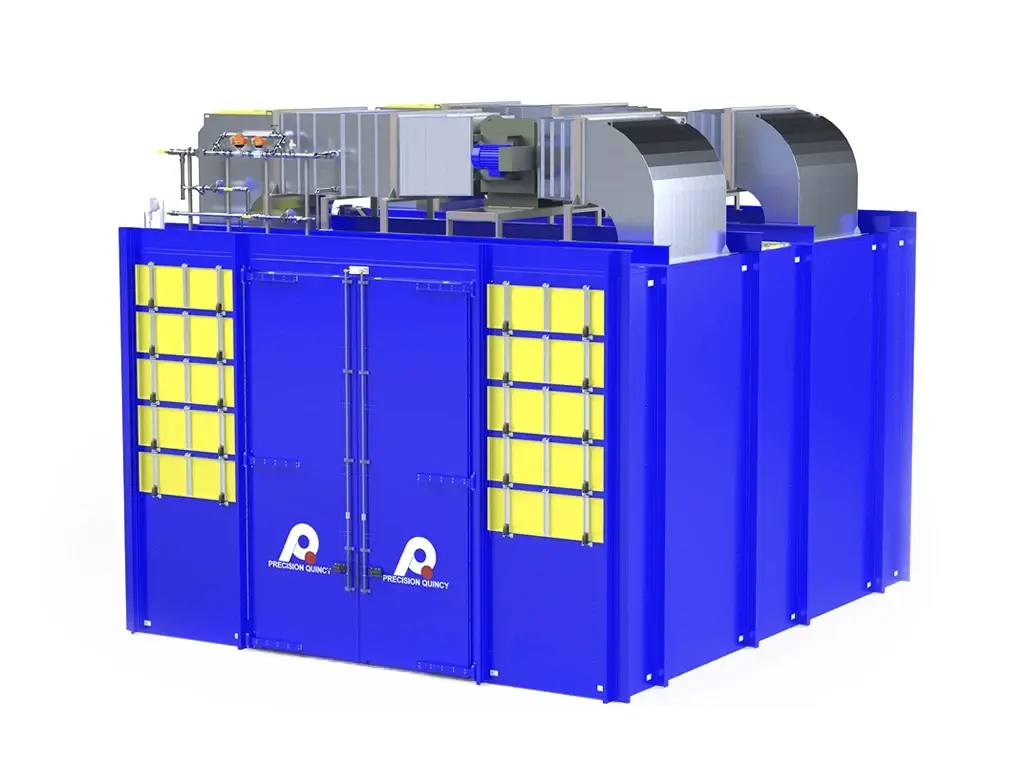
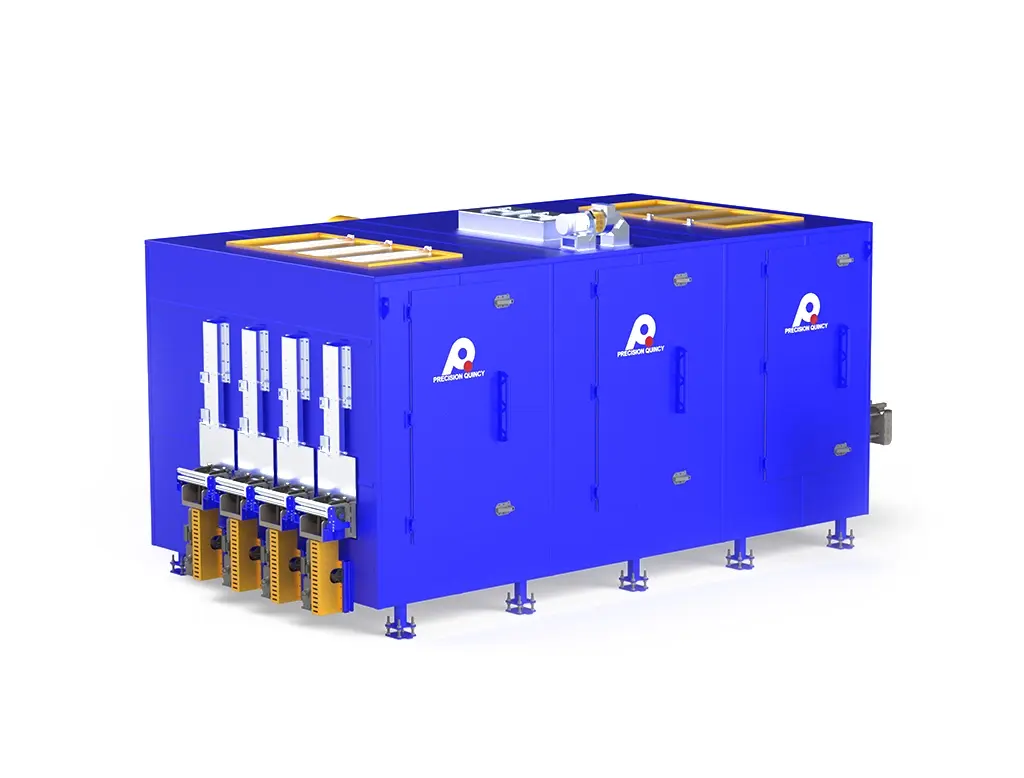
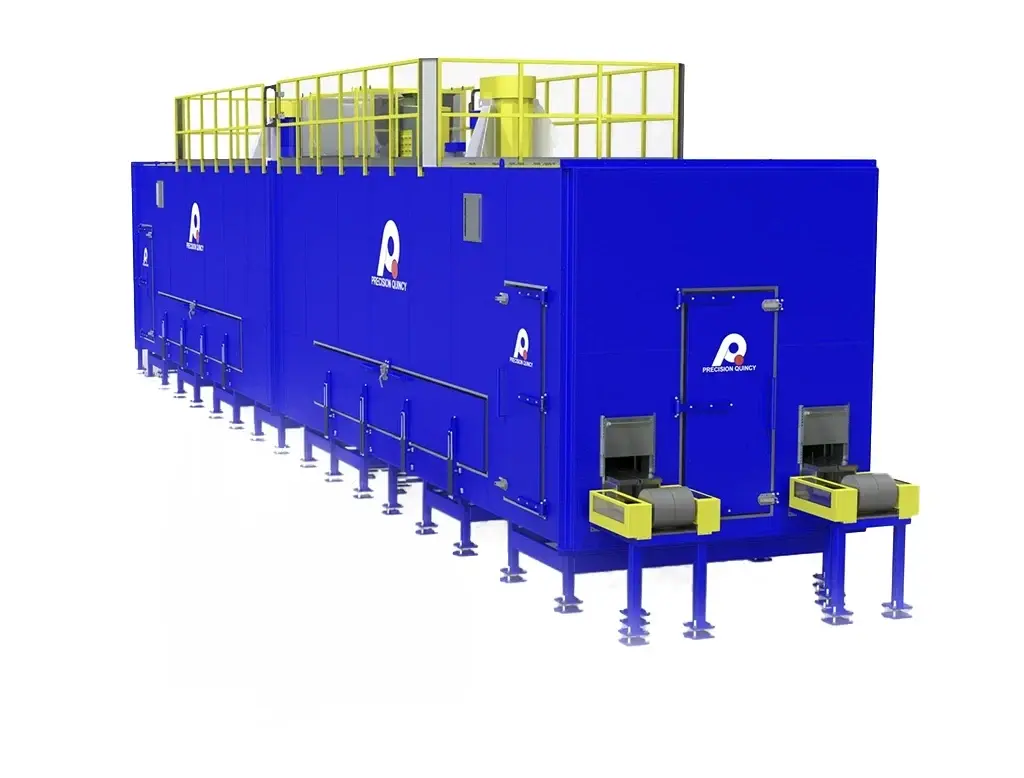
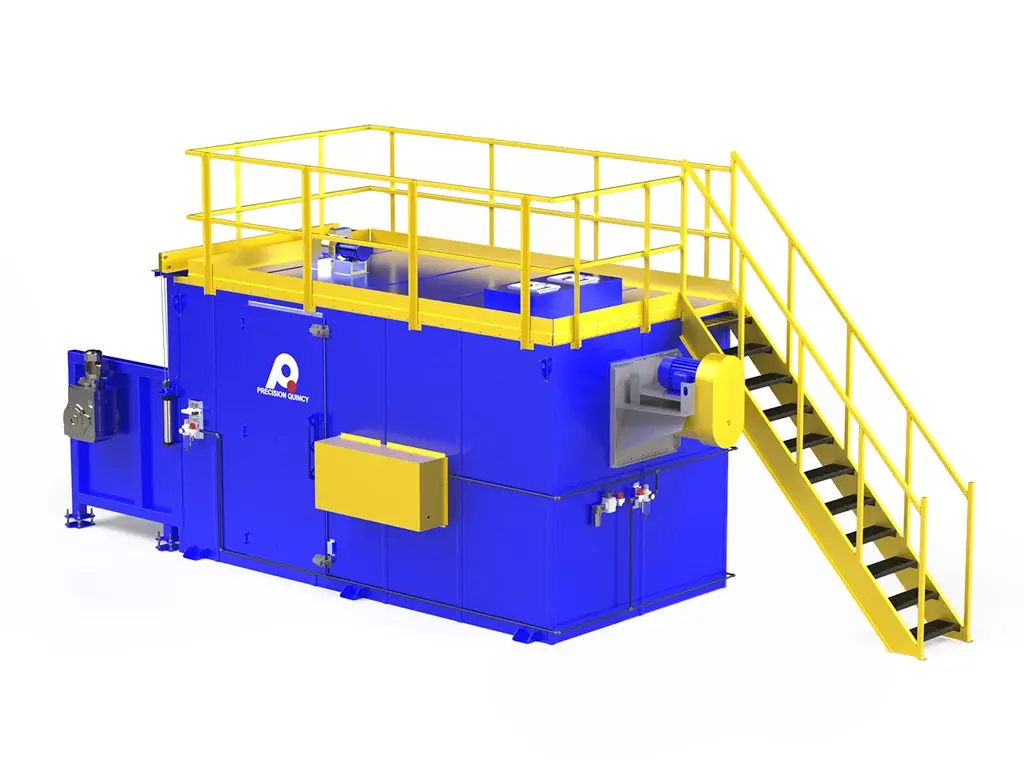
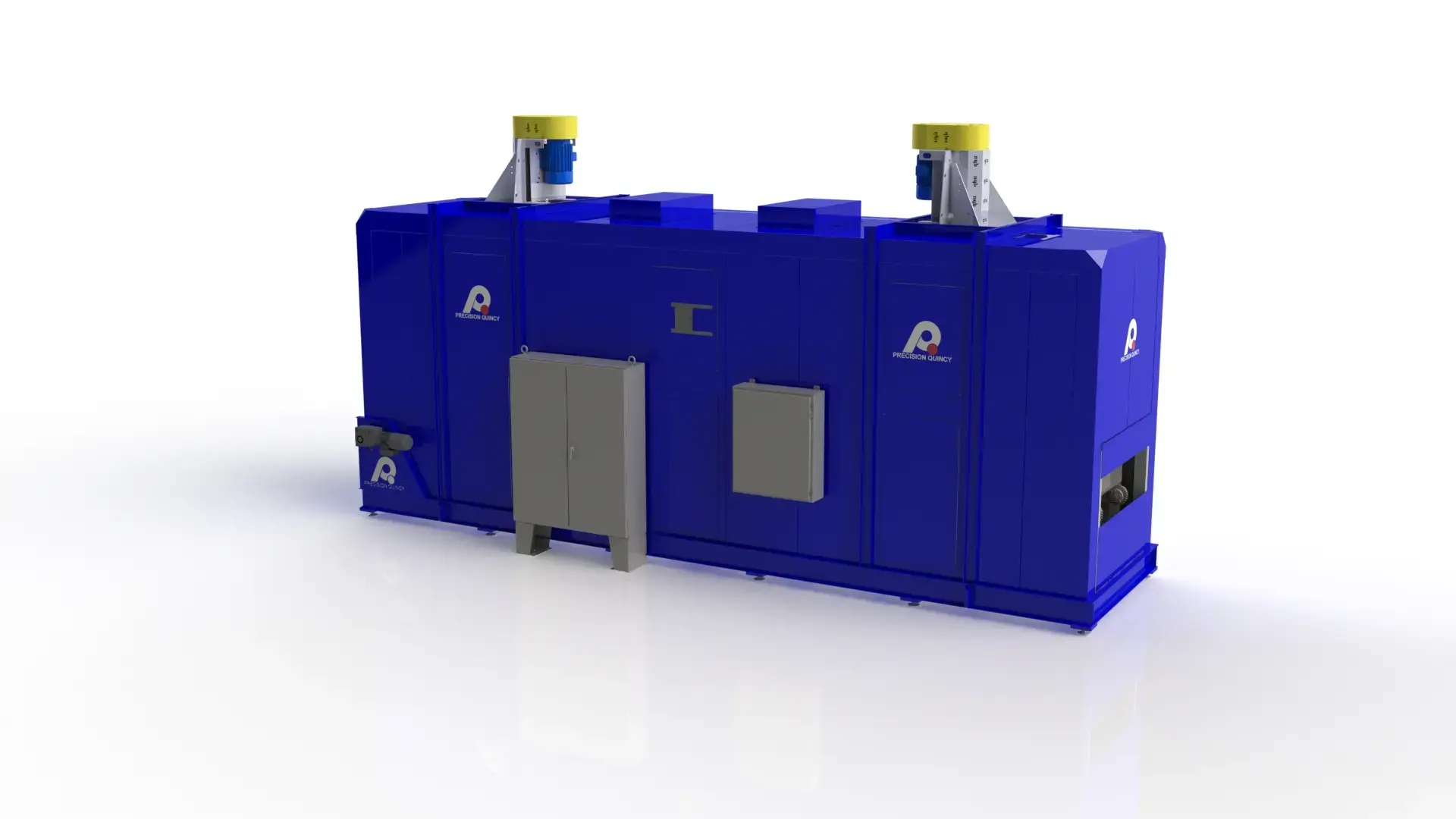
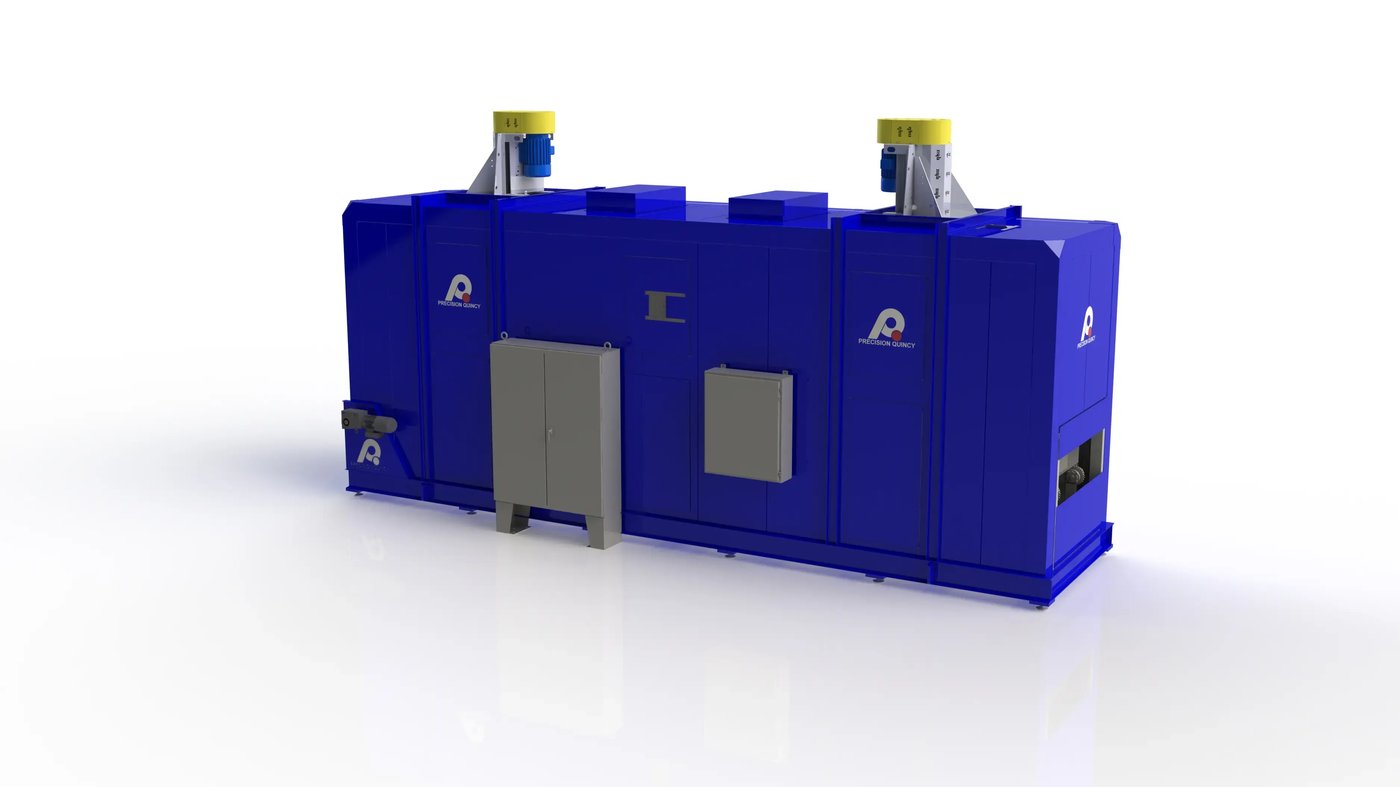
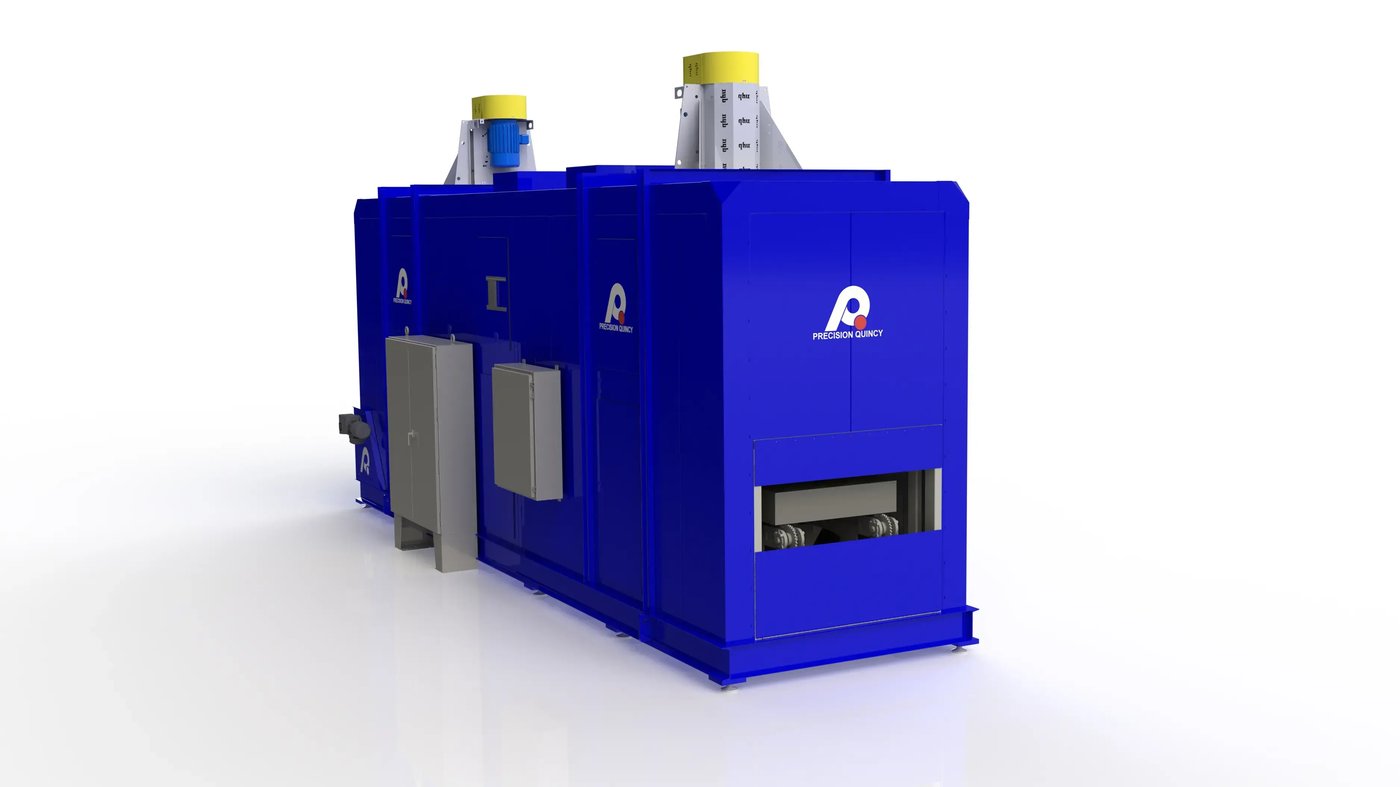
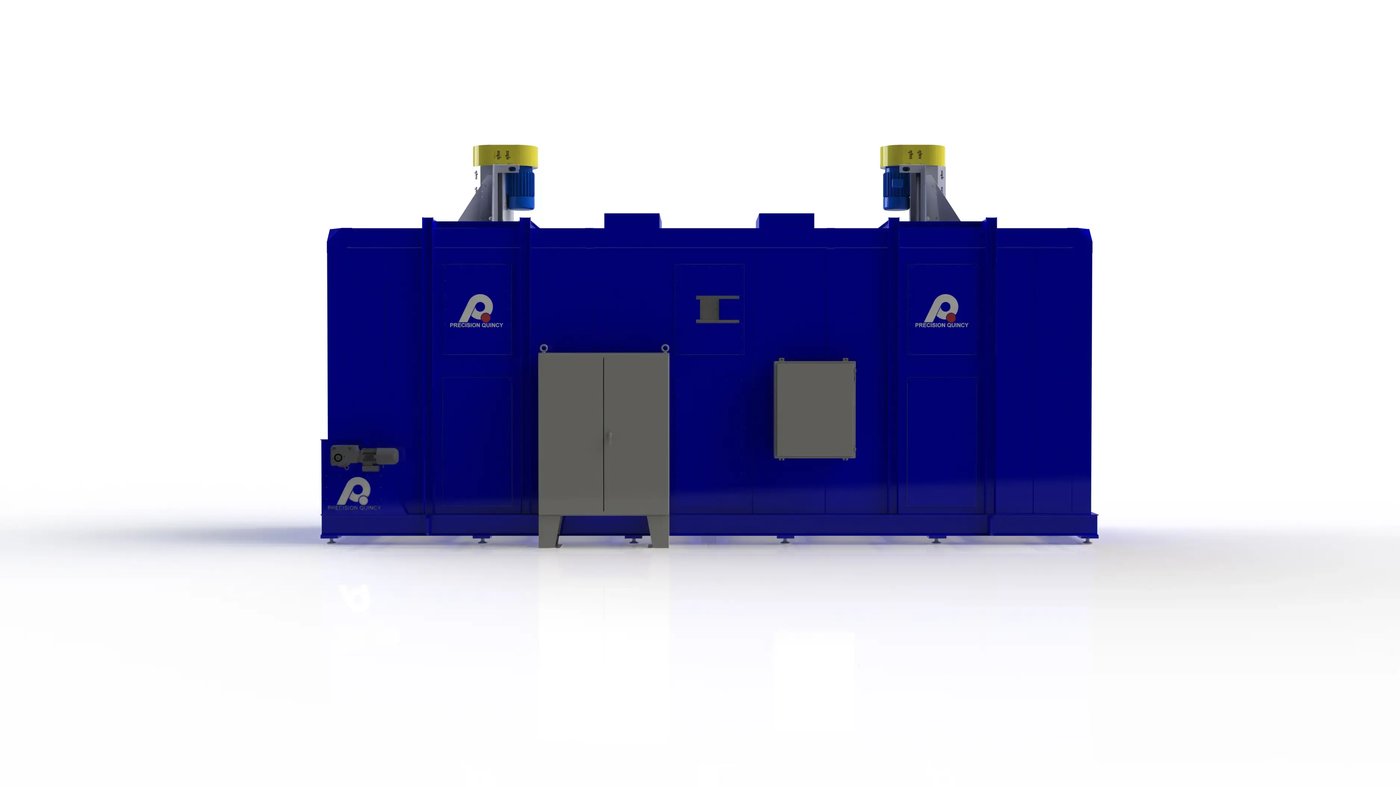
Precision Quincy engineered an electric indexing conveyorized preheat oven system for an industry-leading electric vehicle manufacturer to bring a critical power-electronics motor-control module to temperature prior to automated burn-in testing. By preheating the assemblies before electrical loading, the downstream burn-in operation can begin immediately, reducing warm-up delay and supporting high-volume production targets.
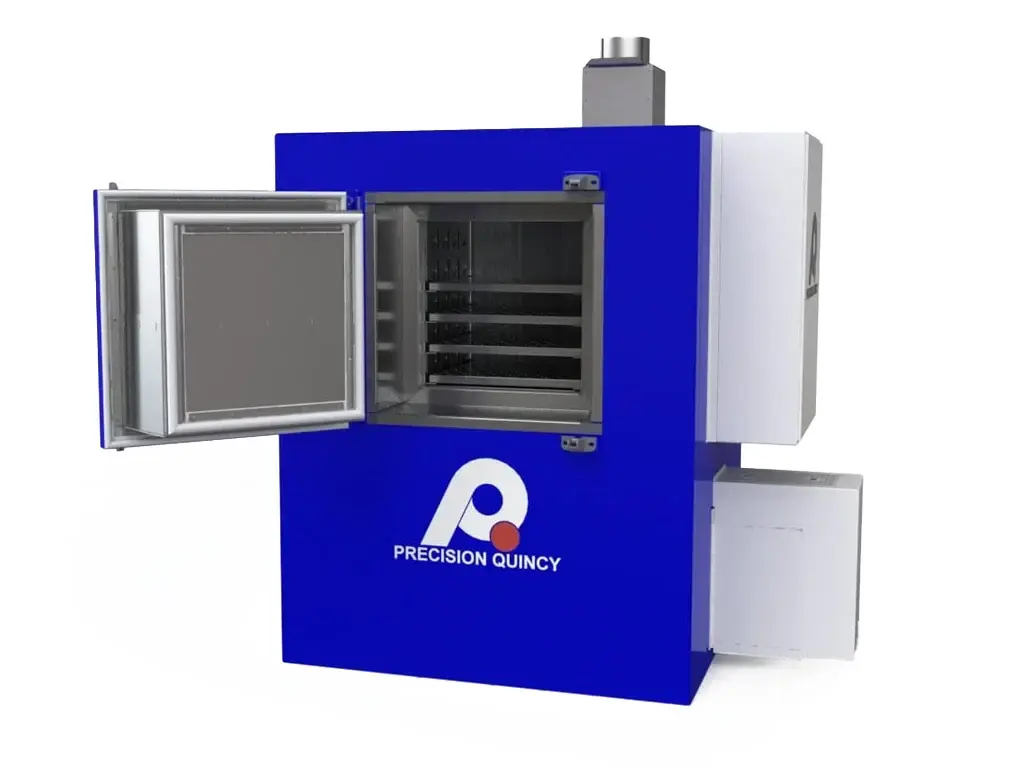
To meet a line demand of 1 part per minute, Precision Quincy implemented a staggered, two-oven architecture in which each oven indexes one pallet every two minutes. The system was validated through hot testing in Precision Quincy’s applications lab with customer personnel on-site, using customer-built assemblies instrumented with embedded thermocouples to verify ramp performance and transfer temperature per the burn-in readiness specification.
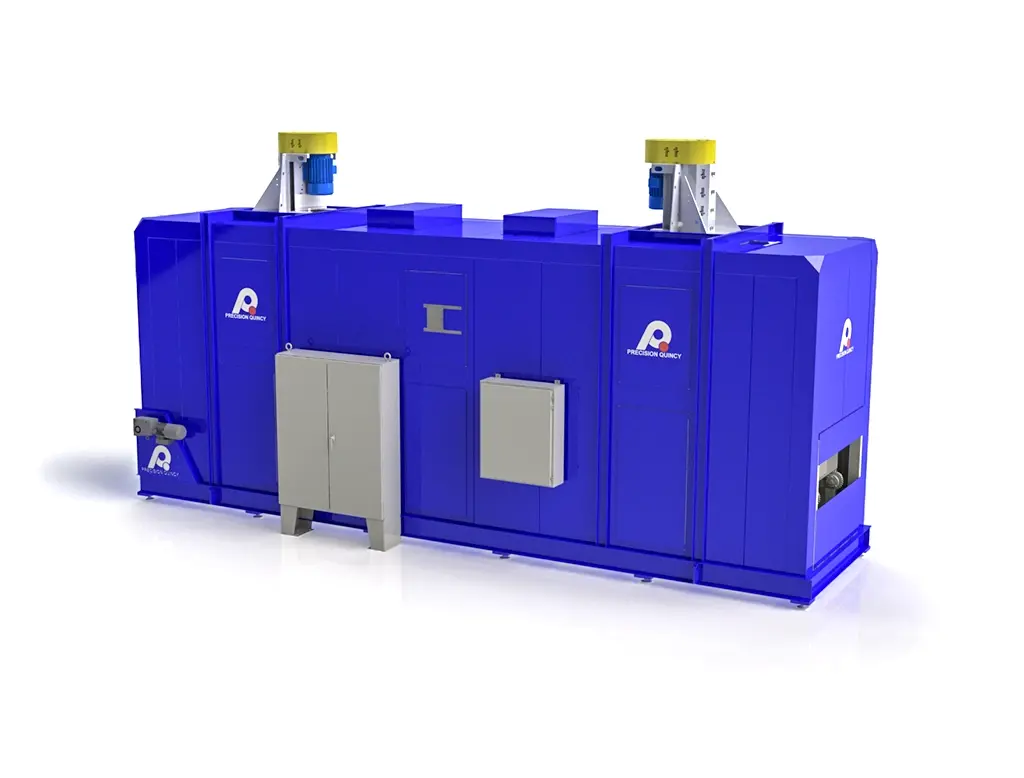
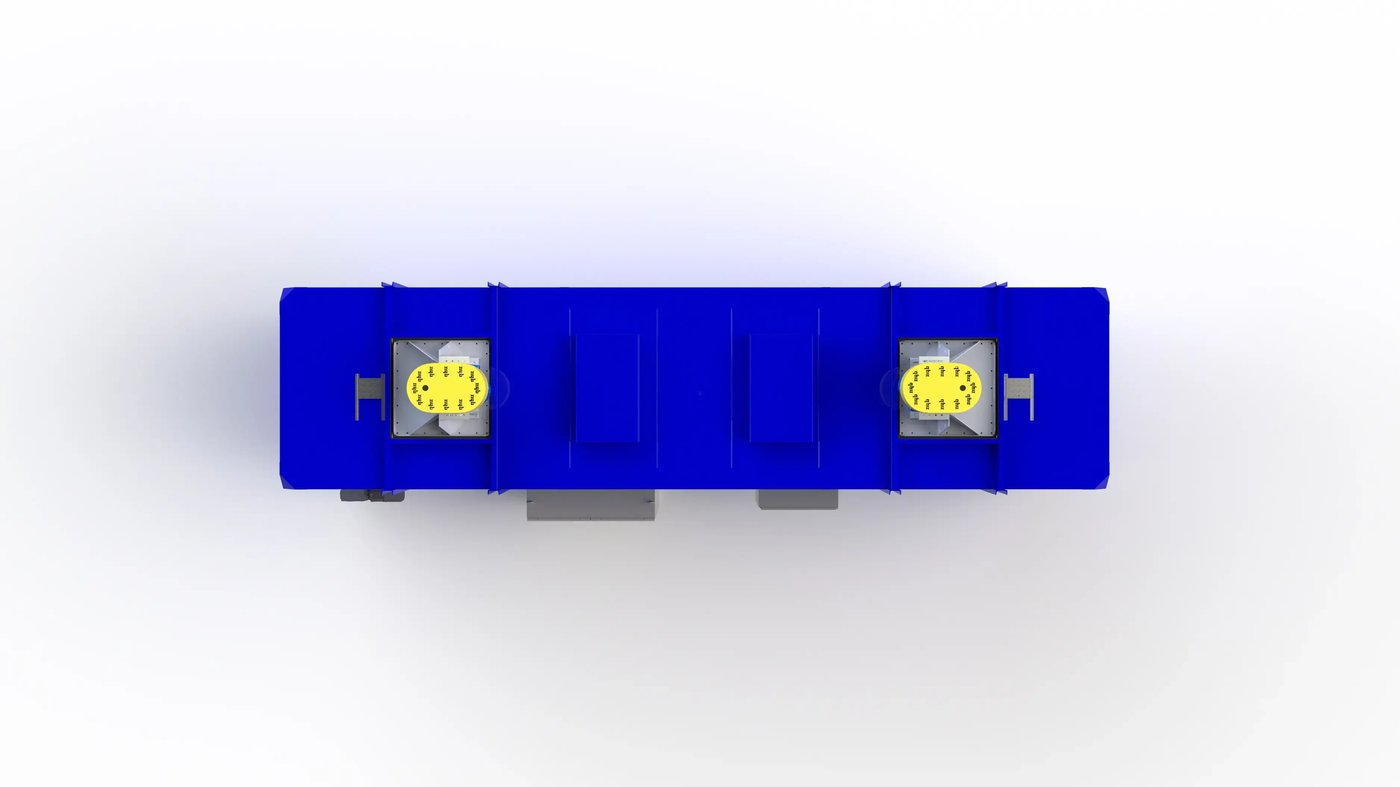
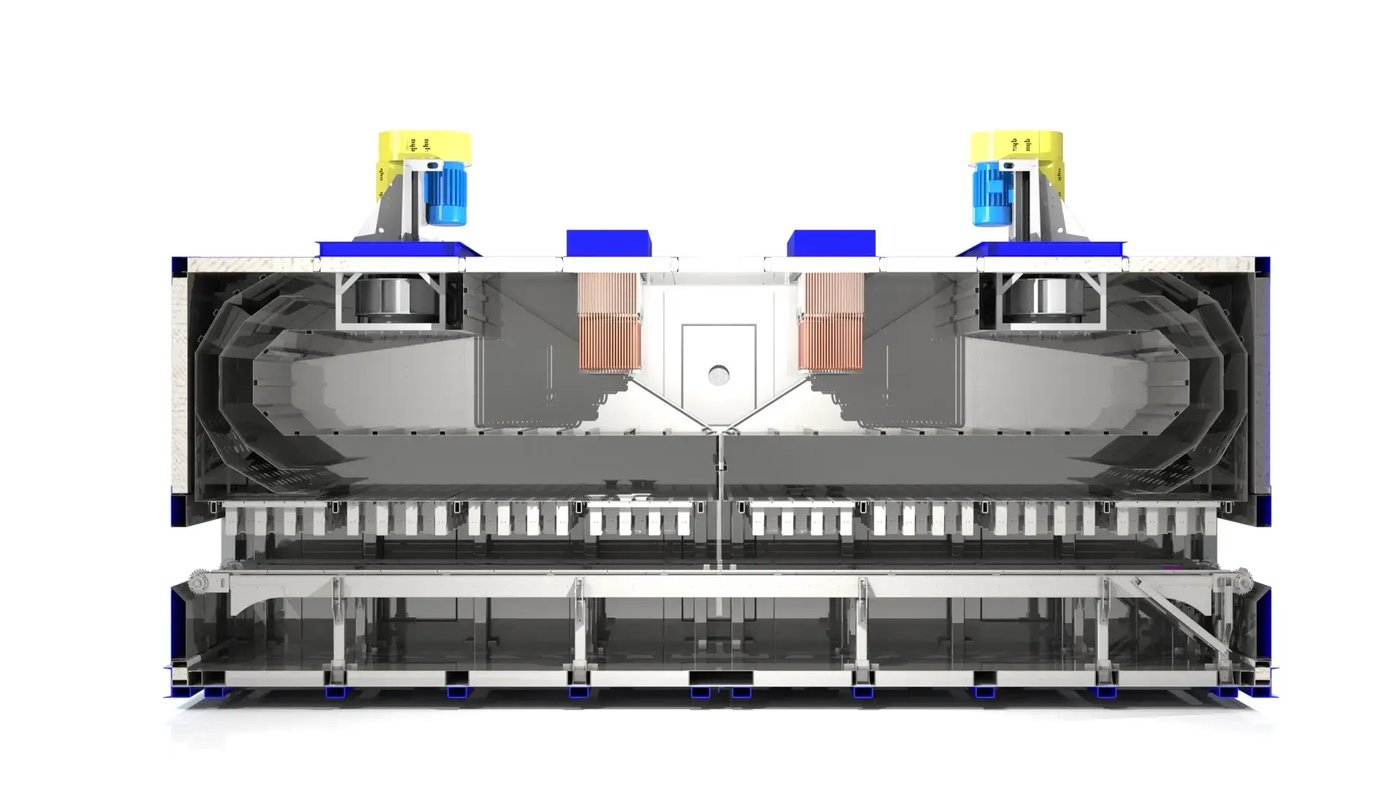
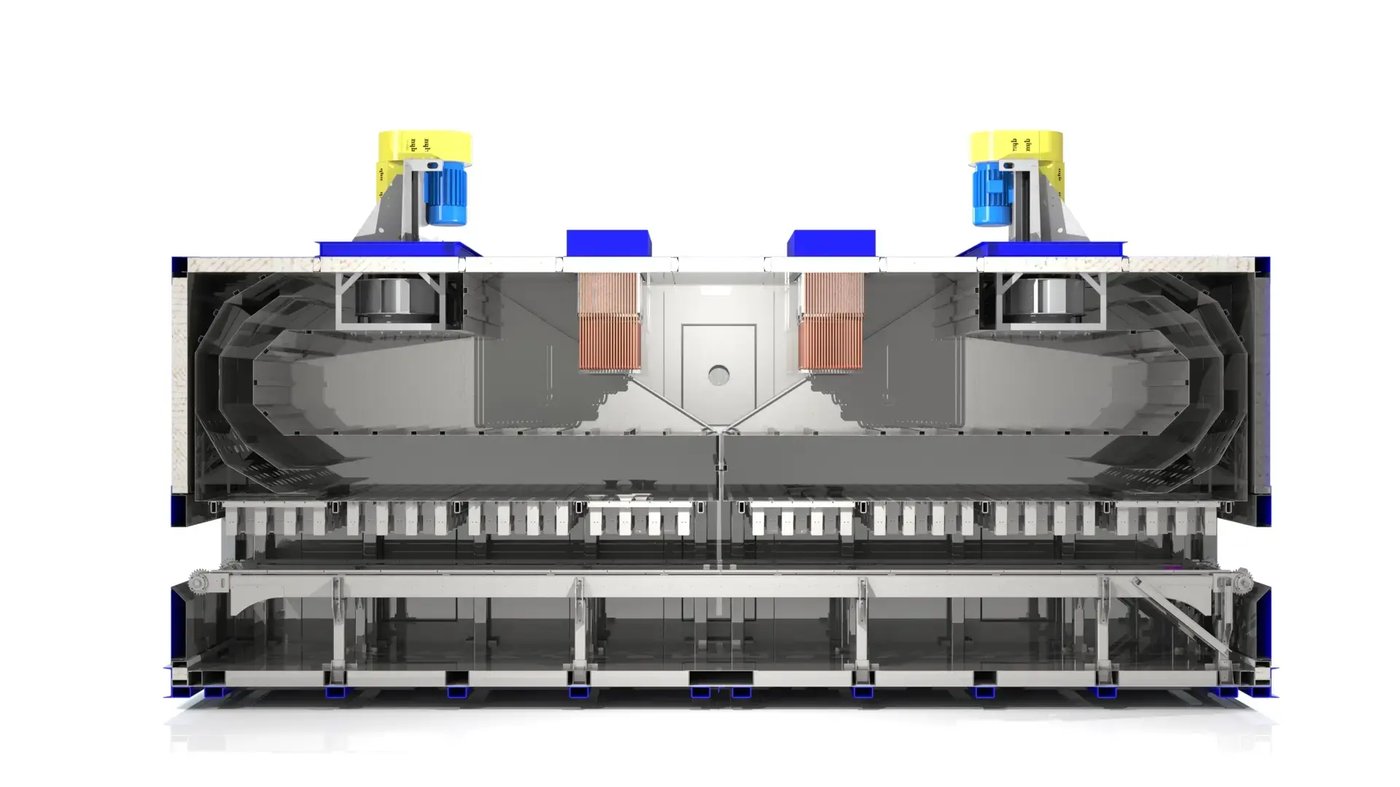
Each oven is a Class B, electric preheat design with a dual control-zone rooftop package: (2) 24 in NYB PLR recirculation fans (10,800 ACFM each at 3.0 in. w.c.; 21,600 ACFM total) and (2) independent electric heater banks delivering 144 kW total heat input. A mirrored “nautilus” duct arrangement turns horizontal fan discharge through a 180° path into a bottom nozzle field, providing alternating top-impingement airflow at 4,000 FPM perpendicular to the product face.
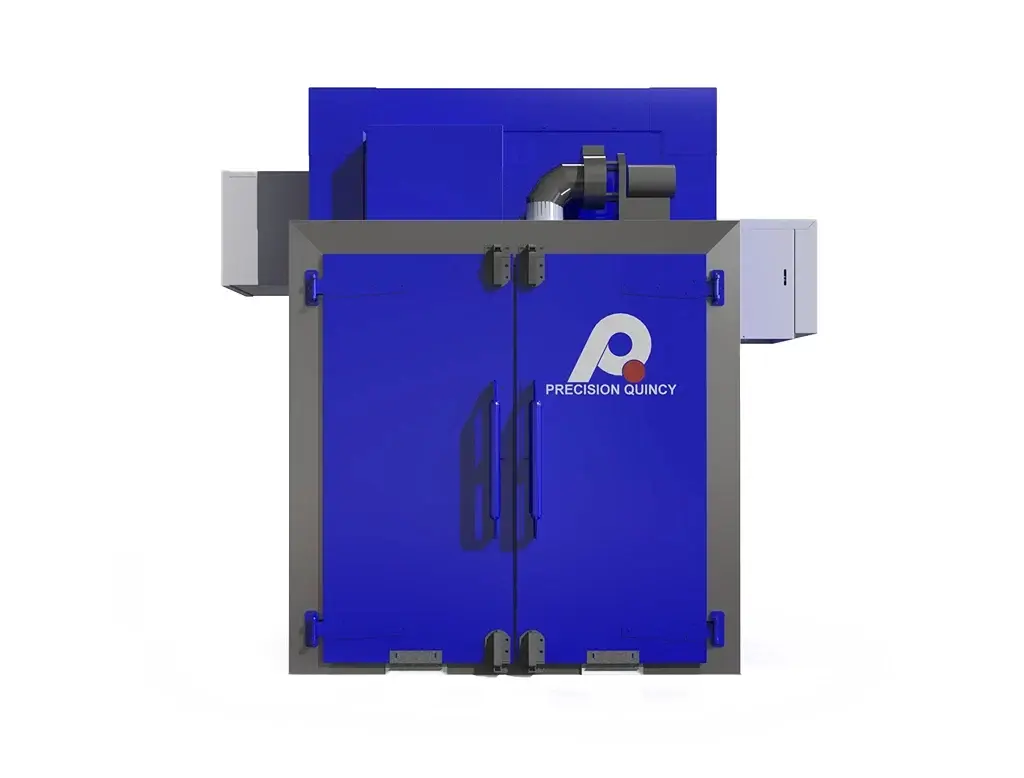
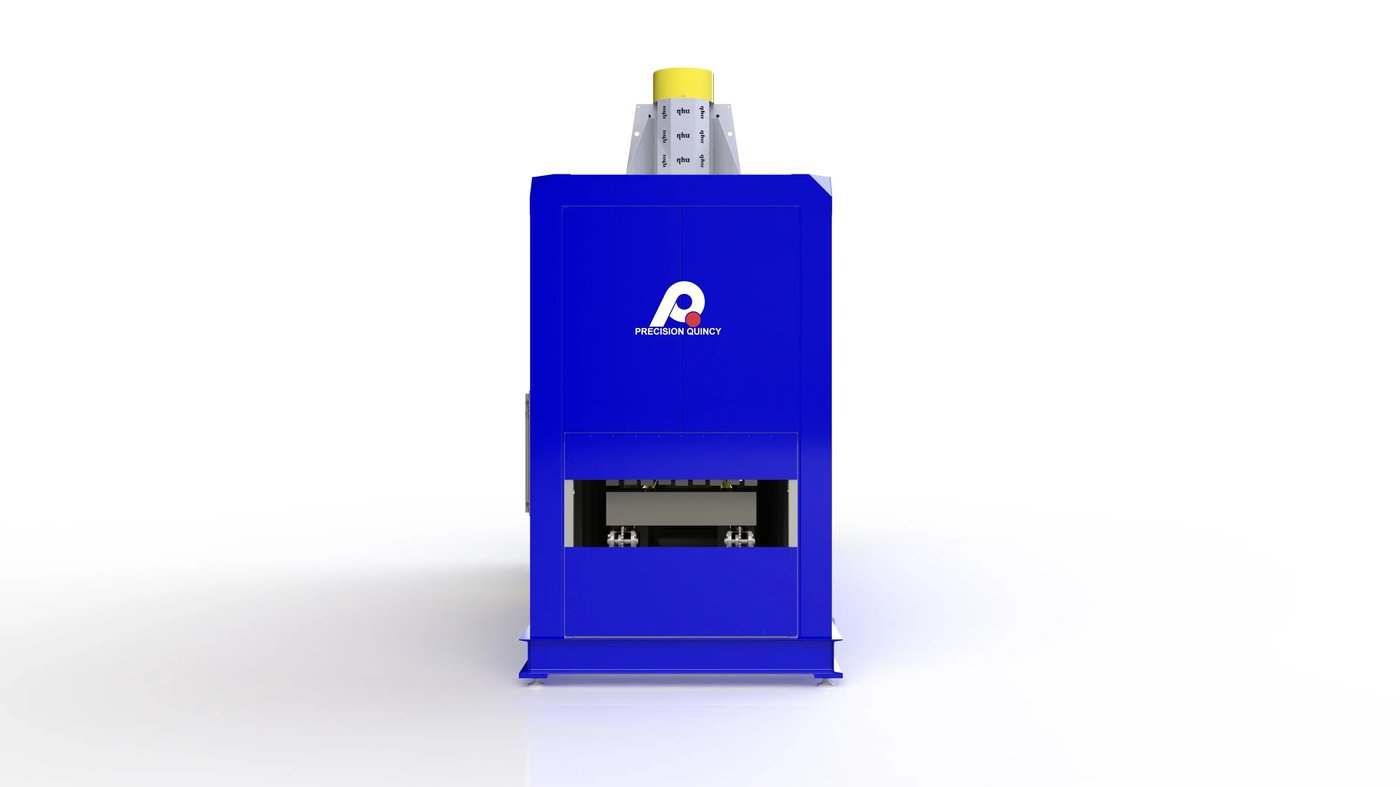
The indexing conveyor system uses a two-strand engineering chain (700 mm strand spacing) with 440 mm index pitch, integrated into the customer’s assembly line via SMEMA ready-to-send/ready-to-receive handshaking. The insulated, tongue-and-groove panel shell (4 in walls, 18-gauge aluminized skins on a structural steel frame) ships as one piece with overall dimensions of 293 in L × 90.32 in W × 153 in H.
The customer required a continuous preheat system to bring a critical power-electronics assembly—a motor-control module housed in an aluminum enclosure and transported on an aluminum pallet—to temperature prior to an automated burn-in test. Preheating enabled the burn-in operation to begin immediately at load, reducing required tester count and supporting the targeted production rate.
PROCESS OBJECTIVE (PREHEAT FOR BURN-IN TESTING)
- Preheat the electronic assembly prior to burn-in so the downstream tester can begin applying electrical load immediately.
- Ensure the part transfers into the burn-in process at temperature with no additional warm-up delay.
TEMPERATURE REQUIREMENT
- Required preheat setpoint at transfer to burn-in: 100°C.
- Maximum product temperature limit: 115°C (must not be exceeded).
THROUGHPUT REQUIREMENT (LINE RATE)
- Line demand: 1 part per minute.
- Equipment strategy: (2) identical preheat ovens operating in a staggered sequence—each oven indexes 1 pallet every 2 minutes to achieve the combined 1 part/min line requirement.
MATERIAL FLOW & LAYOUT
- Product transport: aluminum pallets/skids on a two-strand engineering chain conveyor.
- Flow: single-pass, indexing movement through the preheat sequence.
- Line integration: SMEMA ready-to-send / ready-to-receive handshaking with upstream and downstream equipment.
- Conveyor datum height: 940 mm line standard.
TIME-TO-TEMPERATURE REQUIREMENT
- Parts must reach 100°C within 30 minutes.
- The preheat sequence includes 15 indexed stations per oven.
HOLD-AT-TEMPERATURE REQUIREMENT
- Must prevent temperature drop during unexpected downstream delays.
- System must maintain the part at the required transfer temperature so it still enters burn-in at 100°C.
PRODUCT ENVELOPE & LOADING
- Maximum product size: 1000 mm W × 200 mm H × 400 mm L.
- Maximum product weight: 35 lb.
- Orientation: part transported flat on the pallet; side rails/guides for repeatable placement.
INDEXING / POSITIONING REQUIREMENTS
- Index pitch: 440 mm per index.
- High repeatability required; pallets must stop consistently at each station and align correctly at discharge.
VALIDATION / ACCEPTANCE
- Customer-built assemblies instrumented with embedded thermocouples distributed throughout the unit.
- Acceptance based on meeting required temperature at all measurement locations per the customer's test specification.
SITE / INSTALLATION CONSTRAINTS
- Installation location: Customer facility, approximately 5,000 ft elevation.
- Electrical service: 480V / 3-phase / 60 Hz.
These thermal process requirements were developed to meet the customer's preheat needs for power-electronics motor-control modules, based on the application conditions, product thermal mass, and line rate requirements.
TEMPERATURE REQUIREMENTS
- Normal operating setpoint: 100°C (212°F).
- Maximum temperature capability: 115°C (239°F).
- Maximum product surface temperature limit: 115°C—must not be exceeded.
LOAD / PRODUCT PARAMETERS
- Product: aluminum-enclosure motor-control module on aluminum pallet.
- Maximum product size: 1000 mm W × 200 mm H × 400 mm L.
- Maximum product weight: 35 lb.
TIME-IN-HEAT REQUIREMENT
- 30 minutes maximum to reach setpoint across 15 indexed dwell stations.
- Each oven completes one pallet every 2 minutes (combined line rate: 1 part/min).
HEAT INPUT REQUIREMENT
- Required heat input: 144 kW electric total per oven (2 independent heater banks, 72 kW each).
- Inconel-sheathed elements, 3 kW each, low watt density for even heat distribution.
AIRFLOW DELIVERY
- Alternating top-impingement airflow delivered perpendicular to product face.
- Target nozzle discharge velocity: 4,000 FPM.
- Recirculation fans: (2) 24 in NYB PLR fans, 10,800 ACFM each at 3.0 in. w.c. (21,600 ACFM total).
- Fan speed control via Allen-Bradley PowerFlex 525 VFDs.
TEMPERATURE UNIFORMITY
- ±10°F (±5.6°C) from setpoint across the full work zone.
ALTITUDE ADJUSTMENT
- System designed for operation at approximately 5,000 ft elevation in Mexico.
- Fan and airflow capacity sized to account for reduced air density at altitude.
To deliver the thermal process requirements, Precision Quincy settled on the following equipment concept and architecture for the indexing preheat oven system.
OVERALL CONCEPT
- Class B, electrically heated, single-pass indexing conveyorized preheat oven.
- Dual-oven, staggered architecture: (2) identical units operating in alternating sequence to achieve 1 part/min combined line rate.
- Heated zone length: 7,000 mm per oven; 15 indexed dwell stations.
- Overall dimensions per oven: 293 in L × 90.32 in W × 153 in H.
AIRFLOW / DUCTING ARCHITECTURE (MIRRORED "NAUTILUS" DUCTS)
- Double, mirrored-image “nautilus” duct arrangement—one duct per recirculation fan/heater bank.
- Fan shaft orientation: vertical. Air exits each fan horizontally, then turns through a 180° curved path down into the supply duct.
- Nozzle delivery: bottom-surface nozzle arrays direct air perpendicularly onto the top face of the product.
- Return path: after impingement, air flows up along both sides of each duct, back through the heater bank and to the recirculation fan.
RECIRCULATION FAN SYSTEM
- Fans: (2) 24 in NYB PLR fans per oven.
- Airflow: 10,800 ACFM each (21,600 ACFM total per oven) at 3.0 in. w.c.
- Motors: 10 HP each.
- Fan speed control: Allen-Bradley PowerFlex 525 VFDs.
HEATING SYSTEM (ELECTRIC)
- Total heat input: 144 kW per oven.
- Inconel-sheathed, 3 kW elements with low watt density; (2) independent heater banks (one per fan/duct zone).
SHELL / CONSTRUCTION ARCHITECTURE
- Insulated, tongue-and-groove panel shell: 4-inch walls with 18-gauge aluminized steel interior and exterior skins.
- Structural steel frame provides a robust and stable platform.
- Free-floating interior sheet-metal pans accommodate thermal expansion/contraction while minimizing through-metal paths.
SERVICE ACCESS
- 6 access plugs per side: 3 for heat-chamber access; 3 for product-area access.
INDEXING CONVEYOR SYSTEM
- Two-strand engineering chain: 700 mm strand spacing, 440 mm index pitch.
- Move speed: 6 m/min (19.7 ft/min); each index is a 440 mm controlled move.
- Drive: 1 HP helical bevel gearbox, VFD-controlled.
- Side rails and positioning guides for pallet registration at each station.
- Line integration: SMEMA ready-to-send / ready-to-receive handshaking.
CONTROLS ARCHITECTURE
- PLC: Allen-Bradley Micro850.
- VFDs: Allen-Bradley PowerFlex 525 (recirculation fans and conveyor drive).
- Temperature monitoring: high-limit thermocouples in each control zone.
- Control cabinet: mounted inside oven structure.
SAFETY SYSTEMS
- NFPA 86 Class B compliance.
- Airflow switches on each recirculation fan as safety interlocks.
- High-limit thermocouples with independent cutout circuits.
SHIPPING & INSTALLATION
- Ships as a single piece; recirculation fans removed from roof for over-road transport, reinstalled on-site.
| OVEN CONFIGURATION | |
|---|---|
| Type | Indexing conveyorized preheat oven, electric, single-pass |
| Quantity | (2) identical units, staggered operation |
| Heated Zone Length | 7,000 mm (275.6 in) per oven |
| Indexed Stations | 15 per oven |
| Overall Dimensions | 293 in L × 90.32 in W × 153 in H (per oven) |
| Equipment Weight | Approximately 9,500 lb (per oven) |
| THERMAL PERFORMANCE | |
|---|---|
| Operating Temperature | 100°C (212°F) |
| Maximum Temperature | 115°C (239°F) |
| Temperature Uniformity | ±10°F (±5.6°C) from setpoint |
| Heat Source | Electric, 144 kW total per oven |
| Heating Elements | Inconel-sheathed, 3 kW each; (2) independent heater banks |
| Airflow Pattern | Alternating top-impingement, perpendicular to product face |
| RECIRCULATION / AIRFLOW SYSTEM | |
|---|---|
| Fans | (2) 24 in NYB PLR per oven |
| Airflow | 10,800 ACFM each @ 3.0 in. w.c. (21,600 ACFM total per oven) |
| Fan Motor | 10 HP each |
| Fan Speed Control | Allen-Bradley PowerFlex 525 VFDs |
| Nozzle Discharge | 4,000 FPM target |
| Duct Architecture | Mirrored “nautilus” ducts (vertical fan shaft, 180° turn to bottom nozzle field) |
| CONVEYOR / HANDLING SYSTEM | |
|---|---|
| Configuration | Two-strand engineering chain, single-pass indexing |
| Strand Spacing | 700 mm |
| Index Pitch | 440 mm per index |
| Move Speed | 6 m/min (19.7 ft/min) |
| Drive | 1 HP helical bevel gearbox, VFD-controlled |
| Conveyor Datum | 940 mm |
| Line Integration | SMEMA ready-to-send / ready-to-receive handshaking |
| PRODUCT SPECIFICATIONS | |
|---|---|
| Product | Power-electronics motor-control module (aluminum enclosure on aluminum pallet) |
| Max Product Size | 1000 mm W × 200 mm H × 400 mm L |
| Max Product Weight | 35 lb |
| Throughput | 1 part/min system rate (1 pallet / 2 min per oven, staggered) |
| CONSTRUCTION MATERIALS / FINISH | |
|---|---|
| Primary Structure | Structural steel frame |
| Shell Type | Insulated tongue-and-groove panel |
| Interior / Exterior | 18-gauge aluminized steel skins |
| Wall Thickness | 4 inches |
| Interior Pans | Free-floating aluminized steel (thermal expansion tolerant) |
| CONTROLS & SAFETY | |
|---|---|
| PLC | Allen-Bradley Micro850 |
| VFDs | Allen-Bradley PowerFlex 525 (fans and conveyor) |
| Temperature Monitoring | High-limit thermocouples, independent cutout circuits |
| Control Cabinet | Mounted inside oven structure |
| NFPA Classification | Class B |
| Safety Interlocks | Airflow switches per fan, high-limit thermocouples |
| UTILITIES | |
|---|---|
| Electrical | 480V / 3-phase / 60 Hz |
| Site Altitude | ~5,000 ft above sea level (customer facility) |
| TESTING & VALIDATION | |
|---|---|
| Factory Test | Hot testing at Precision Quincy applications lab |
| Customer Witness | Tesla personnel on-site during FAT |
| Validation Method | Customer-built assemblies with embedded thermocouples |
| Acceptance Criteria | Target temperature achieved at all measurement points per customer specification |